Gallery of past work

Sunday, 21 April 2019

In Focus Stitching

I will have work in this exhibition at Swindon Museum and Art Gallery, 28 May to 7 September.


To any readers living locally, it would be a pleasure to see you. If you let me know when you hope to come, I will try to be in the gallery. 

This exhibition is the reason for my recent protracted silence. I have been too busy completing my work and organising the exhibition to post!


Tuesday, 19 March 2019

Figures

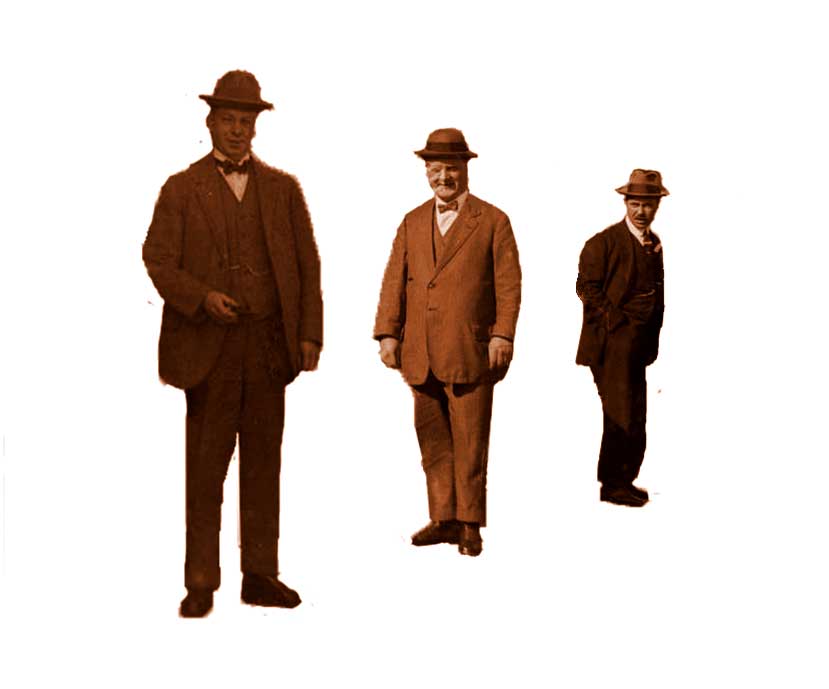
I’ve been working with figures found in early 20th century photos in the Swindon Museum and Art Gallery archive for a new piece of work featuring people from the period.

This has entailed opening likely-looking photos in Photoshop Elements, such as this one of a group of  Great Western Railway committee members in the 1920s or 30s about to board a train from Swindon for a day out.


Here, I clicked on the Quick Selection tool, outlined each chosen figure (to achieve accuracy takes some patience), right clicked on the selected image, and chose Layer Via Copy from the pop up menu and then edited it. This created a copy of the image which could then be moved around, adapted, enlarged or minimised using the Move tool. It could then be saved in the usual way for later use. These groups of men and women resulted.


I am building up a library of such figures from various photos. Each figure has been saved on a separate layer so that it can be used easily in future work. 


Monday, 11 March 2019

Layers for Stitch

For my latest series of work for exhibition at Swindon Museum and Art Gallery in May, I've been experimenting with stitch on two layers, ultimately to be laid one over the other in some way. This post is very much 'work in progress' and stitching is not yet complete.

I generated all the images below in Adobe Photoshop Elements and then printed them onto fabric using an Epson pigment ink printer. In each case, the under layer is printed on cotton and the top layer on organza to maaximise transparancy. I have stitched on both layers, sometimes one over the other and sometimes on different parts of the image. In each case, I've used a single thread of DMC floss to keep the stitch as light touch as possible.

First, stitching is shown on the top organza layer, here seen lying over paper without the underlying cotton layer to show the delicacy of the printed image and the stitch. Here I've used a simple running stitch but because of the transparancy of the organza, the threads on the back are visible as well as those on the front, giving a unique effect. 


The next images show stitching on the bottom cotton layer only. Here running stitch and a small stab stitch have been used to work over and integrate parts of the design (in the first image) and to delineate and embellish features (in the second).


I'm currently experimenting with different ways for overlaying the organza. Interesting effects seem to be generated by separating the two layers with spacers and even by off-setting them slightly. There is also the possibility of putting the organza layer over the reverse side of the cotton layer so that the sometimes quite complex stitch on the front can be seen clearly. Both sides would then be seen by the viewer.

The ultimate plan as I write is to show the work in acrylic / Perspex frames and I am currently researching possibilities.


Tuesday, 5 March 2019

Final thought?

I've spent much time recently playing with the fourth starter image I previously posted here. After much consideration - minipulating colours and opacity and adding, duplicating, moving and removing layers (it was a long process), I've ended up with this.


At least, I think this could be a finishing point and a piece ready for stitching but I will need a time away from it to view it impartially before I can be sure. I find a time interval very helpful. Things need to settle in my mind before I can view things objectively, especially when they are as visually complex as this one. 

My main concern with it, as so often with my work, is the complexity of the image and the question of whether there is actually space for stitching and whether it will add anything or merely increase the sense of visual business. Printing out onto proofing paper will help as images often looks very different when the intense light and glimmer of the computer screen has gone. On the other hand, sometimes stitching in a fairly muted and harmonious colour can help to 'knock back' an image and unify it. Some experimentation will be needed!

This image has been built up over some time, with the various elements being added as the mood has taken me, so of course, it's always possible I may yet start again from scratch adding the elements one by one and see where it gets me. As each small element is added on a separate layer, I am able do this and it may help me solve the complexity problem if I feel I need to. 

The use of digital photo manipulation software sure throws up its own challenges!


Friday, 22 February 2019

Japanese prints

On Tuesday, I went with my husband to an exhibition of Japanese Ukiyo-e prints in Stroud at the Museum in the Park. Ukiyo-e translates as 'Pictures of the Floating world'. These beautiful stylised prints portray an ideal and perfect world where all flaws are removed.

They were created in Japan between 1603 and 1868 in the Edo period. This lasted for around 260 years and was a time of extraordinary isolation in Japan's history. Frontiers were closed to outsiders and the Japanese were not allowed to travel abroad. Commerce was severely controlled and artists had to abide by the regulations of the time laid down by the Shogunate (military dictatorship). As a result, the art developed without any significant external cultural influences. The unique and instantly recognisable art form of woodblock printing resulted, with its extraordinary level of skill.

Hokusai The Great Wave of Kanagawa  pub between 1829 - 1833

As we had anticipated, we enjoyed the landscapes most of all since we had been enticed initially by promise of Hokusai's The Great Wave of Kanagawa. This we had seen previously at Monet's house in Giverny when we'd been returning from a holiday with our family in France. Time on that occasion had been short and the room where the work was displayed was full of other tourists. We were keen to get a closer and more prolonged look.

We were not disappointed. It was a delight to be able to look at the detail of the tiny figures in the boats and in those extraordinary finger-like waves  breaking with such power and, to my mind, some menace. This piece was the first of his series 'Thirty-six views of Mount Fuji and is the work for which he is most famous. It is probably also the Japanese art work which is most famous in the western world.

Hokusai Fine Wind, Clear Sky or Red Fuji c. 1830 - 1833

Beside it was hanging another of his 36 views called Fine Wind, Clear Sky or Red Fuji. We hadn't seen this before and were very impressed by the rich colour and the graphic simplicity of its design. It contrasted strongly with many of the other more detailed prints in the exhibition illustrating folk tales or showing samuri warriors or 'beautiful women'.

There were also many superb prints by Hiroshige who is considered to be the last of the great masters of the tradition. We especially enjoyed his Snows of Kanbara with its limited palette and the small domestic details of those little figures, bent against the cold.

Hiroshige Snows of Kanbara c 1832

It was also most interesting to see the lovely The Plum Garden in Kameido, particularly as we had previously seen it in the Van Gogh Museum last year in a beautifully curated exhibition exploring the links between Van Gogh and Japanese art. We had then seen also Van Gogh's interpretion of this work alongside the print. It was fascinating to make this link again.

Hiroshige The Plum Garden in Kameido

Although I've focused here on a very limited number of the landscapes in this small but well-curated exhibition, there was so much else to enjoy. For those interested and living locally, it continues until 24 March. There is also to be an exhibition at the Bristol Museum and Art Gallery from 18 May to 8 September, which promises on the Museum website to feature life in the city of Edo (Tokyo) and the printing process itself.


Thursday, 14 February 2019

Making unexpected links

Moving on with work for Swindon Museum and Art Gallery for the middle of May, I accidentally printed off two copies of an image on organza as well as the single that I had intended on cotton. I was therefore left with three versions on different weights of fabric which set me thinking and overlaying one on the other. I like nothing to go to waste.

The result gave interesting repetitions of the shapes in the original version and gradations of colour to repeat and work on. Quite a lot more playing will be needed to make this usable but I'm fascinated by the subtleties that result from layering one, two and even three sheets of fine fabric in this way.


Funny how accidents can often be the start of new things ...

It made me reconsider a fascinating image seen in January in an exhibition of photographs in the Museum in the Park, Stroud. The images were curated and some taken by the group 31 Studio and featured the unique 19th century (and completly new to us) Platinum Palladium printing process initially using glass negatives. 

31 Studio were among the first photographers in Europe to revive and specialise in this process after the Second World War and the exhibition showed monochrome prints from the early historical archives right through to contemporary photographers and artists. It was fascinating and my husband and I spent a most pleasurable hour looking carefully through all the work on show. We especially enjoyed the huge range of greys generated by the process, since it produces no abosolute blacks or whites. Even the densest of blacks reveals subtleties and variations on close looking. 

The photograph that especially took my eye and that I'm showing in the context of my happy printing accident was one of the Houses of Parliament by Idris Khan in which there had been successive overprinting of the buildings along the banks of  the River Thames. Other examples of his diverse and fascinating work can be found here and here among many other places. 

Idris Khan  The Houses of Parliament, London, 2015

Sadly, this photograph of a photograph (and it behind glass at that) doesn't do justice to the delicate and beautiful subtleties of the image I saw in the exhibition. At the time, I counted at least ten repetitions of Big Ben (the most emotionally loaded and so most noticeable image in the whole) laid one over the other, and moved about and repeated. Closer looking revealed so much other repetition. 

This dense visual layering and repeated imagery is seemingly characteristic of all Khan's work. This quote from artnet, which amused me with its comment on the value of Photoshop, summarises his process.

Khan's work is connected through his intricate process of layering multiple images. He often blankets surfaces with sequential images - either captured through staccato photogaphy or through the frames of a video - until his work is a blurred composite, offering a condensation of time into a single point that fluctuates between representation and abstraction. ' A lot of people in the art world hate to use the word 'Photoshop', like its cheating or easy or something, ' he once eplained of his process. ' I say b------- to that - for me, it's my tool, my paintbrush if you like, and lets me create my own visual language.'

I can only say how much I share his views of the value of Photoshop!